
In today’s increasingly competitive business environment, controlling logistics costs has become a strategic priority. However, reducing expenses should never come at the expense of customer service.
The goal is not simply to spend less, but to optimize logistics operations in a way that improves profitability while maintaining high service standards.
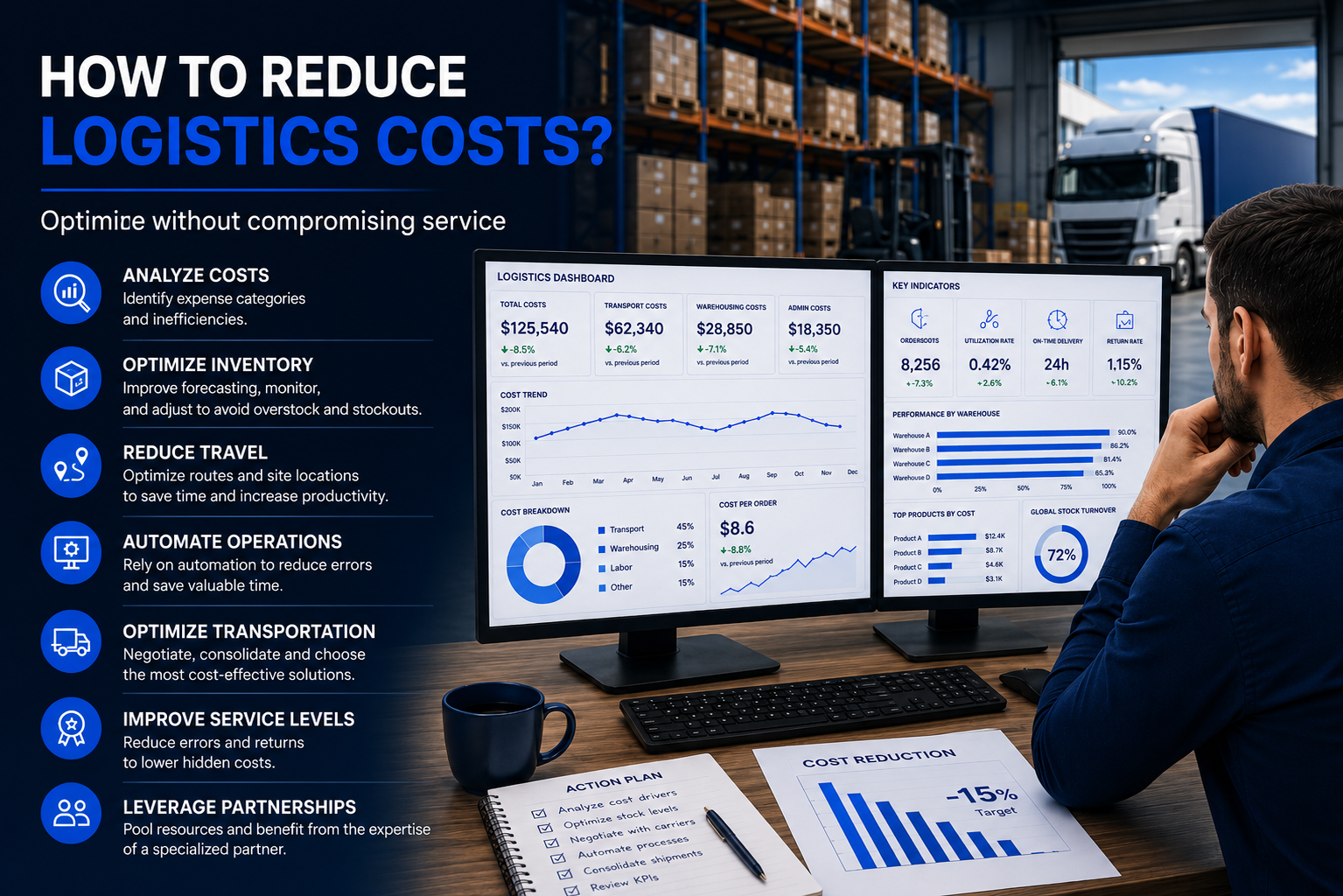
Here are seven practical strategies to reduce logistics costs without sacrificing operational performance.
Analyze Your Current Logistics Costs
Before implementing any cost-saving initiatives, it is essential to understand where your logistics budget is being spent.
The main logistics cost categories typically include:
- Warehousing
- Order fulfillment
- Transportation
- Returns management
- Packaging materials
- Logistics software and technology
A detailed cost analysis often reveals hidden inefficiencies and opportunities for improvement.
Optimize Inventory Management
Poor inventory management can generate significant unnecessary costs.
Excess inventory ties up working capital and increases storage expenses, while insufficient inventory leads to stockouts and lost sales.
Best practices include:
- Monitoring inventory turnover
- Improving demand forecasting
- Tracking key inventory KPIs
- Automating replenishment processes
Well-managed inventory reduces costs while ensuring products remain available when customers need them.
Minimize Unnecessary Warehouse Travel
In many warehouses, employee travel time represents a substantial portion of daily operations.
Optimizing warehouse layout can:
- Speed up order picking
- Reduce picking errors
- Increase workforce productivity
Frequently ordered products should always be stored in easily accessible locations to reduce unnecessary movement.
Automate Repetitive Logistics Processes
Technology plays a critical role in improving logistics efficiency.
Solutions such as:
- Warehouse Management Systems (WMS)
- Barcode scanning systems
- Inventory tracking software
- Automated reporting dashboards
help eliminate manual tasks, reduce errors, and increase productivity while lowering operational costs.
Optimize Transportation
Transportation is often the largest logistics expense.
Several strategies can significantly reduce transportation costs:
- Consolidate shipments
- Negotiate better carrier rates
- Optimize delivery routes
- Reduce partially filled shipments
- Select the most appropriate transportation mode
An optimized transportation strategy lowers costs while maintaining reliable delivery performance.
Improve Service Accuracy
Reducing logistics errors is another effective way to lower operating costs.
Every fulfillment mistake may result in:
- Product returns
- Replacement shipments
- Additional administrative work
- Lower customer satisfaction
Improving operational accuracy reduces these hidden costs while strengthening customer trust.
Consider Outsourcing Your Logistics
For many businesses, partnering with an experienced third-party logistics (3PL) provider is one of the most effective ways to optimize logistics costs.
A professional logistics partner enables companies to:
- Share operational resources
- Reduce infrastructure investments
- Access advanced logistics technology
- Benefit from industry expertise
Outsourcing also provides greater flexibility, allowing businesses to scale operations without increasing fixed costs.
Conclusion
Reducing logistics costs does not mean sacrificing service quality.
The most successful companies continuously optimize inventory management, warehouse operations, transportation, and technology to improve efficiency while delivering an outstanding customer experience.
By investing in smarter logistics processes and working with experienced logistics partners, businesses can build a more cost-effective, resilient, and scalable supply chain.
Looking to Reduce Your Logistics Costs?
Lower logistics costs start with smarter warehousing, efficient fulfillment, and optimized transportation.
At Partners In Logistics International, we help businesses improve operational efficiency through flexible 3PL logistics, warehousing, e-commerce fulfillment, and international transportation solutions tailored to their needs.
