
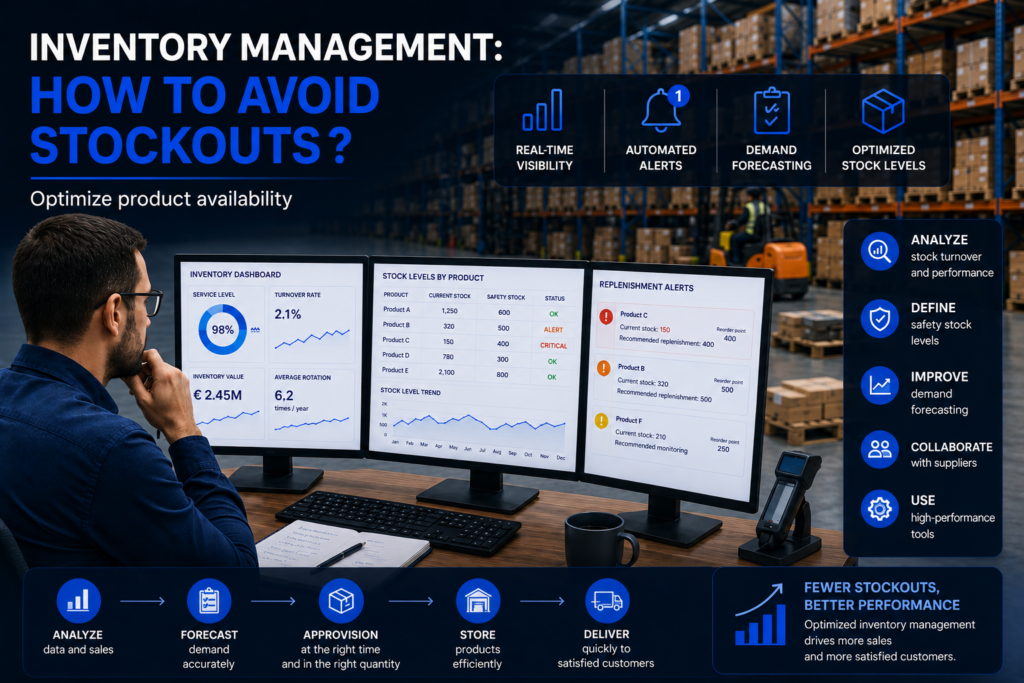
Stockouts are among the most costly challenges businesses can face. They lead to lost sales, dissatisfied customers, and can even damage long-term brand loyalty.
In today’s fast-paced market, where customers expect products to be available and delivered quickly, effective inventory management has become a strategic priority for businesses of every size.
So, how can you prevent stockouts while avoiding the costs associated with excess inventory?
Why Are Stockouts So Costly?
A stockout is more than simply running out of a product.
It can result in:
- Immediate loss of revenue
- Lower customer satisfaction
- Damage to your brand reputation
- Higher emergency procurement and shipping costs
- Customers turning to competitors
The longer a stockout lasts, the greater its impact on your business.
Analyze Inventory Turnover
Not every product behaves the same way.
Some items sell quickly, while others remain in storage for extended periods.
Analyzing inventory turnover helps you:
- Identify your best-selling products
- Forecast replenishment needs
- Adjust inventory levels accordingly
This approach ensures that resources are allocated where they deliver the greatest value.
Maintain Safety Stock
Safety stock acts as a buffer against unexpected disruptions.
It helps protect your business from:
- Supplier delays
- Sudden spikes in demand
- Forecasting errors
- Logistics disruptions
Establishing appropriate safety stock levels significantly reduces the risk of stockouts without creating unnecessary inventory.
Improve Demand Forecasting
Accurate forecasting is essential for maintaining product availability.
Successful businesses rely on:
- Historical sales data
- Seasonal demand trends
- Marketing campaigns
- Market intelligence
Reliable forecasts allow inventory levels to closely match actual customer demand.
Automate Inventory Alerts
Modern inventory management systems provide real-time stock visibility.
Automated alerts can notify your team when:
- Inventory reaches critical levels
- Stock decreases unexpectedly
- Supplier deliveries are delayed
Automation reduces manual monitoring and helps prevent costly oversights.
Strengthen Supplier Relationships
Reliable suppliers are essential to maintaining consistent inventory levels.
Strong collaboration enables businesses to:
- Anticipate supply chain disruptions
- Secure reliable lead times
- Improve visibility across inbound shipments
Building long-term supplier partnerships helps minimize stockout risks.
Use Warehouse Management Software
Modern Warehouse Management Systems (WMS) and Enterprise Resource Planning (ERP) solutions provide complete control over inventory operations.
These systems offer:
- Real-time inventory visibility
- Complete inventory movement tracking
- Advanced reporting and analytics
- Automated forecasting and replenishment
Technology significantly improves inventory accuracy while supporting better operational decisions.
Consider Outsourcing Your Logistics
For many companies, partnering with an experienced third-party logistics (3PL) provider is one of the most effective ways to improve inventory management.
A professional logistics partner provides:
- Modern warehouse infrastructure
- Advanced inventory management systems
- Experienced logistics professionals
- Optimized operational processes
By outsourcing warehousing and inventory management, businesses gain better visibility, greater flexibility, and lower operational risks.
Conclusion
Preventing stockouts requires the right balance between forecasting, inventory visibility, and operational responsiveness.
Analyzing inventory turnover, maintaining appropriate safety stock, automating inventory management, and using modern logistics technology all contribute to a more resilient supply chain.
Companies that invest in effective inventory management improve customer satisfaction, reduce operating costs, and gain a significant competitive advantage.
Ready to Improve Your Inventory Management?
Keeping the right products available at the right time requires efficient warehousing, accurate inventory control, and reliable logistics operations.
At Partners In Logistics International, we help businesses optimize inventory management through flexible 3PL logistics, warehousing, e-commerce fulfillment, and transportation solutions tailored to their operational needs.
