
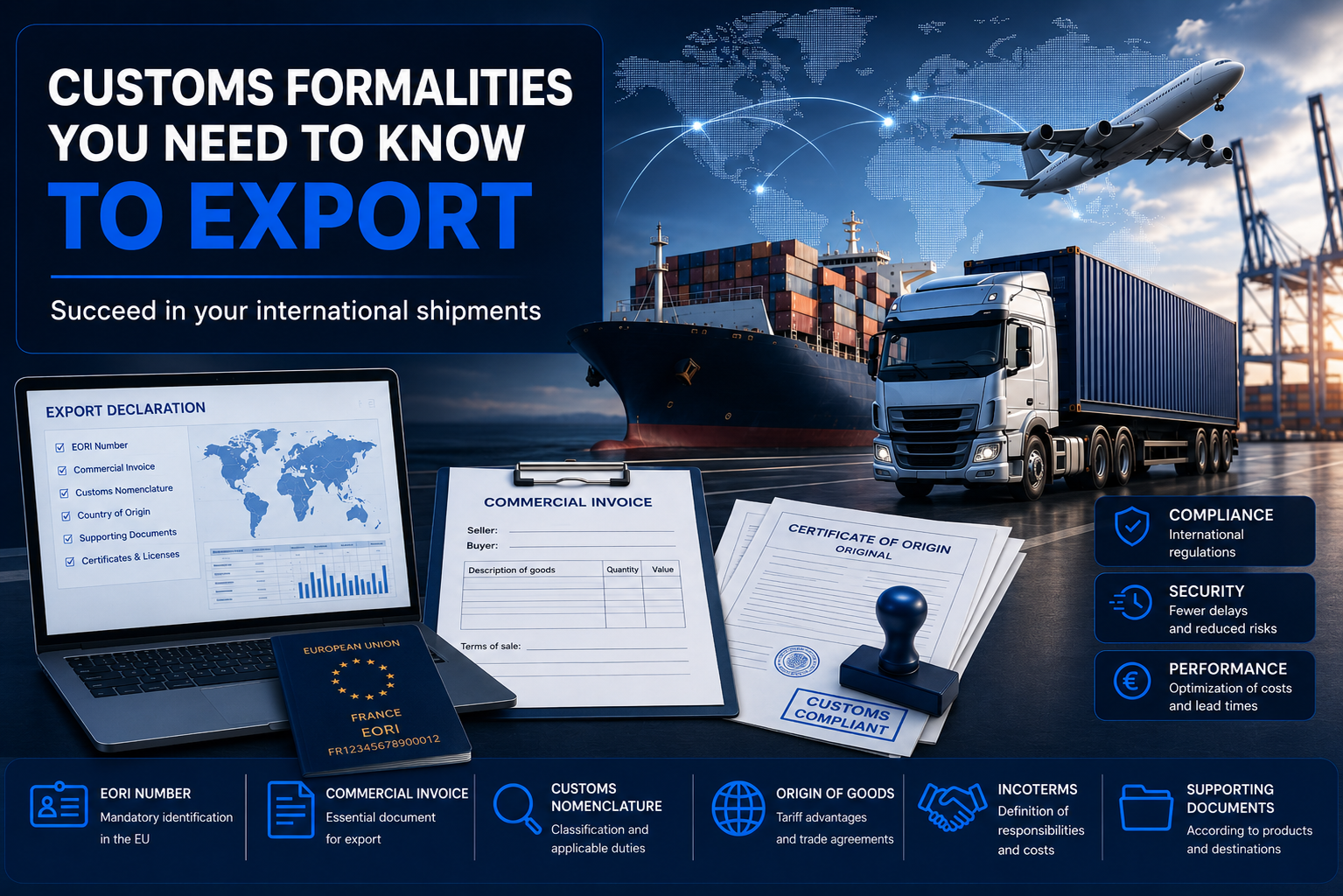
Expanding into international markets is an excellent opportunity for business growth. However, exporting goods also requires compliance with customs regulations and international trade requirements.
Failing to prepare the necessary documentation can lead to shipment delays, unexpected costs, or even goods being held at customs.
Here are the key customs procedures every exporter should understand before shipping products overseas.
Why Are Customs Procedures Important?
Customs procedures allow government authorities to monitor international trade and ensure goods comply with local regulations.
They are used to:
- Identify imported and exported goods
- Monitor international trade flows
- Calculate applicable duties and taxes
- Verify compliance with local regulations
Proper customs documentation helps ensure smooth shipments while reducing the risk of costly delays.
Obtain an EORI Number
Businesses exporting goods from the European Union generally need an EORI (Economic Operators Registration and Identification) number.
This unique identification number allows customs authorities throughout the EU to recognize your business during customs procedures.
For most European exporters, obtaining an EORI number is the first step toward international trade.
Prepare an Accurate Commercial Invoice
The commercial invoice is one of the most important export documents.
It should clearly include:
- Seller information
- Buyer information
- Product descriptions
- Quantities
- Product values
- Terms of sale
Customs authorities rely on this information to assess shipments and verify compliance.
Classify Products Correctly
Every exported product must be assigned the correct customs tariff (HS) code.
This classification determines:
- Applicable customs duties
- Product-specific regulations
- Import or export restrictions
Incorrect classification can result in delays, additional charges, and administrative complications.
Verify the Origin of Goods
The country of origin plays an important role in international trade.
Depending on existing trade agreements, the origin of goods may allow businesses to benefit from:
- Reduced customs duties
- Preferential tariff treatment
- Duty exemptions
Exporters should always be able to provide proof of origin when required.
Choose the Right Incoterms®
Incoterms® define the responsibilities of buyers and sellers during international shipments.
They determine:
- Who arranges transportation
- Who assumes transportation risks
- Who manages customs clearance
- Who pays shipping-related costs
Selecting the appropriate Incoterm has a significant impact on both logistics planning and overall costs.
Prepare Additional Documentation
Depending on the destination country and the products being shipped, additional documentation may be required, including:
- Certificates of origin
- Export licenses
- Health or sanitary certificates
- Transport documents
- Country-specific customs declarations
Every destination has its own import requirements, making preparation essential.
Work with an Experienced Customs Partner
Customs regulations frequently change and differ from one country to another.
Working with an experienced logistics and customs partner helps businesses:
- Ensure regulatory compliance
- Avoid administrative errors
- Reduce customs clearance delays
- Optimize international shipping costs
Professional support simplifies export operations and minimizes risks.
Conclusion
Understanding customs procedures is essential for successful international trade.
Preparing accurate documentation, classifying products correctly, selecting appropriate Incoterms®, and complying with destination-country regulations all contribute to faster, more reliable exports.
Partnering with an experienced transportation and customs specialist allows businesses to expand internationally with greater confidence and efficiency.
Need Help Managing International Shipments?
International logistics requires expertise in transportation, customs clearance, and global supply chain management.
At Partners In Logistics International, we help businesses simplify international shipping through flexible transportation, customs support, warehousing, and 3PL logistics solutions designed for global trade.
